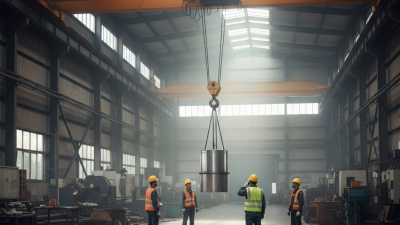
Choosing the right Wall Crane begins with more than lifting capacity. Global buyers must examine building structure, duty class, working radius, power supply, controls, and maintenance access. A compact workshop may need a wall-mounted jib crane. A long production bay may require a traveling wall crane. Different layouts create different answers.
The top 10 Wall Crane types usually include fixed wall-mounted jib cranes, traveling wall cranes, cantilever wall cranes, articulated-arm cranes, folding-arm cranes, monorail wall cranes, workstation wall cranes, electric wall cranes, manual wall cranes, and customized process cranes. Each design solves a particular movement problem. Some prioritize reach. Others reduce floor obstruction. A few offer precise positioning near machinery.
As lifting-equipment engineer Martin Keller observes, “A crane’s rated load matters less when the wall cannot safely carry the working forces.” That warning deserves attention. Buyers should verify anchorage, foundation conditions, deflection limits, and operating frequency with qualified engineers. Product brochures rarely show the whole risk picture.
The category is not perfectly tidy. Manufacturers may use different names for similar configurations. This can confuse international purchasing teams. Therefore, compare technical drawings, not only product titles. Check hook height, outreach, rotation angle, travel length, speed, controls, and emergency functions. Confirm compatibility with local electrical requirements and recognized safety standards.
This guide examines ten practical Wall Crane types for global buyers. It compares their strengths, limitations, installation needs, and suitable applications. Some recommendations may change after a site survey. That is normal. A reliable purchase is based on measured conditions, not assumptions.
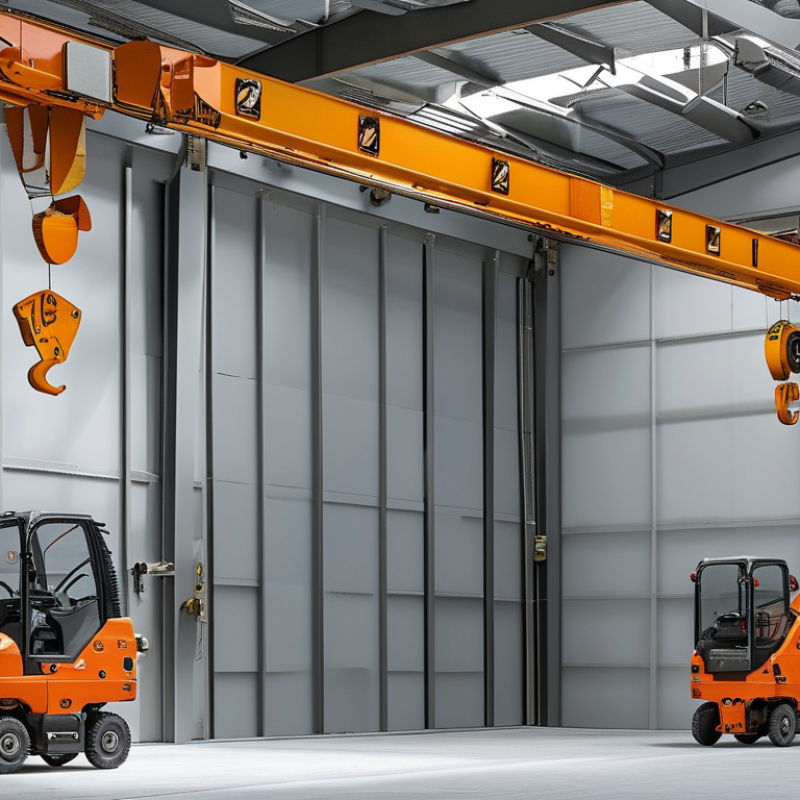
What are the top 10 wall crane types for global buyers? The answer depends on five measurable factors: mounting, motion, safe working load (SWL), span, and duty class. Common configurations include fixed wall jib, traveling wall jib, articulated-arm, folding-arm, telescopic-arm, wall-traveling, underhung, monorail, slewing, and low-headroom wall cranes. Each serves a different workplace. A fixed jib may turn 180 degrees beside a machine. A traveling wall crane can move along a runway and cover several bays.
Mounting controls the available floor space. Motion defines whether the crane lifts, slews, travels, or combines these actions. SWL should match the heaviest verified load, including lifting accessories. Typical wall cranes range from 125 kg to 10 tonnes, while custom systems can exceed that range. Span often falls between 3 and 10 metres, but building strength sets the real limit. A 2024 Grand View Research analysis projected the global crane market to grow at about 4.6% annually through 2030, indicating continued demand for compact handling equipment.
ISO 4301-1 classifies crane duty through load spectrum and operating frequency, from light A1 service to intensive A8 service. A workshop lifting two loads per hour may need a lower class. A production line running continuously needs a higher class. Check starts per hour, average load, and daily operating time. A neat specification sheet can still mislead. Buyers sometimes choose SWL first and inspect the wall later. That order should be reversed. Structural verification, runway deflection, brake performance, and local installation conditions deserve equal attention.
Wall cranes are commonly defined by their mounting method, movement, safe working load (SWL), working span, and ISO 4301-1 duty class. The chart shows representative engineering configurations rather than a market ranking.
How to read the chart: SWL values range from 0.5 to 20 tonnes. A higher ISO 4301-1 class generally indicates more frequent operation and greater duty-cycle requirements. Final selection should also consider lifting height, travel speed, load spectrum, building structure, and local safety regulations.
Wall cranes serve compact production areas where floor space must remain clear.
The useful range here is 0.5–10 t SWL, 3–12 m span, and 3–9 m lift. SWL means the safe working load, not the maximum breaking load.
A fixed wall-mounted jib suits light lifts near one workstation.
An articulated wall jib reaches around columns and machines. A folding-arm wall crane fits narrow service bays. A pillarless wall jib leaves the floor unobstructed.
A manual wall crane works well for occasional loads below about 1 t. Small spans. Simple handling.
A wall-traveling crane moves along a runway and serves several stations.
A single-girder wall-traveling crane offers economical coverage from 1–5 t.
A double-girder wall crane supports heavier loads and longer spans, often near 10 t and 12 m.
An under-running wall crane can use the lower runway flange where headroom is limited.
A top-running wall crane provides stronger wheel support for frequent industrial cycles.
A telescopic wall crane extends into recessed work areas, but its structure needs careful deflection control.
Actual selection depends on duty cycle, lift height, wall strength, and trolley clearance.
A 5 t load at 9 m lift may require a stronger anchor system than the weight alone suggests.
I have seen layouts fail on access space, not capacity.
Engineers should verify load paths, runway alignment, brakes, controls, and applicable safety requirements before fabrication.
Categories overlap, and that can confuse buyers.
Wall crane selection starts with the building, not the catalog. Wall-mounted jib cranes suit circular coverage around one column. Wall-traveling cranes move along runway beams, serving several workstations. Wall monorail cranes follow a fixed linear route. Articulating jib cranes reach around machinery, corners, and doorways. Fixed wall cranes offer simpler lifting over one bay. Space is expensive.
The remaining useful designs include wall cantilever cranes, wall-console cranes, folding-arm cranes, wall-mounted workstation cranes, and wall-mounted bridge cranes. Cantilever models create clear floor space beneath the beam. Console cranes work well beside production lines. Folding arms help where access is restricted. Workstation cranes support lighter, repetitive handling. Bridge cranes provide broader rectangular coverage, but they demand stronger structural support. These differences affect load rating, hook approach, travel speed, maintenance access, and installation cost.
Fortune Business Insights valued the global crane market at about USD 50.10 billion in 2023. Its outlook projects approximately USD 73.63 billion by 2032, with a 4.4% compound annual growth rate. That growth does not make every wall crane suitable. A 2024 Grand View Research assessment also identifies manufacturing and construction as major demand areas. Buyers should verify beam deflection, anchor loads, duty class, and local engineering requirements. I would not rank articulating cranes above traveling cranes without site measurements. A tight corner may favor reach, while a long assembly line needs travel. The neat ranking breaks down quickly.
What Are the Top 10 Wall Crane Types for Global Buyers?
For global buyers, the best wall crane depends on duty, not appearance. Common options include fixed wall jib, traveling wall, bracket-mounted, tie-rod wall jib, mast-supported, underhung, monorail, double-arm, folding-arm, and telescopic-arm cranes. FEM 9.511 and ISO 4301-1 classify cranes by load spectrum and operating time. They do not classify lifting capacity alone.
FEM 1Am suits light, occasional handling, such as moving tools across a small workshop. FEM 2m fits regular pallet transfers and moderate production cycles. FEM 3m is better for repeated steel, mold, or machinery handling. FEM 4m targets severe, frequent service, often involving high cycles and demanding environments. A 2-ton crane can still require 3m duty if it starts and stops hundreds of times daily.
Count real cycles.
The 2024 Fortune Business Insights crane market report valued the global crane market at about USD 36.74 billion in 2023. That growth increases pressure to specify equipment accurately, especially for export projects. Check starts per hour, average load percentage, hook travel, temperature, dust, and corrosion before selecting a class. A clean spreadsheet can mislead. Operators may lift heavier loads than planned, and that changes the duty calculation. Wall strength also matters. Engineers should verify anchor bolts, reinforcement, runway alignment, emergency stops, and inspection access against local requirements. Geological vibration and coastal salt exposure deserve attention too.
| No. | Wall Crane Type | Typical Configuration | Indicative Capacity | Recommended FEM Duty | Load-Cycle Profile | Suitable Work Environment | Main Advantages | Important Selection Check |
|---|---|---|---|---|---|---|---|---|
| 1 | Fixed Wall-Mounted Jib Crane | Horizontal jib fixed to a reinforced wall or structural column; manual or powered slewing. | 0.25–10 t 2–7 m reach |
FEM 1Am–2m | Intermittent lifting, typically 10–30 lifts per hour with long idle periods and light-to-moderate average loading. | Machine shops, maintenance bays, warehouses, fabrication areas and loading points. | Low foundation demand, economical installation and efficient coverage of one workstation. | Verify wall strength, anchor design, jib deflection and the required slewing angle. |
| 2 | Travelling Wall-Mounted Jib Crane | Jib crane mounted on travelling brackets that move along elevated runway beams attached to the building. | 0.5–5 t 6–30 m travel |
FEM 2m–3m | Regular transfer between several workstations, commonly 30–80 lifting cycles per hour. | Assembly lines, maintenance halls, production cells and long workshop bays. | Combines local slewing with longitudinal movement while preserving floor space. | Check runway alignment, building-column loads, end stops, collector systems and travel clearance. |
| 3 | Wall-Mounted Slewing Jib Crane | Powered or manually slewing arm with a hoist trolley; often designed for 180°–270° rotation. | 0.5–8 t 3–8 m reach |
FEM 2m–3m | Repeated point-to-point handling with moderate lifting frequency and moderate load spectrum. | Process stations, foundries, metalworking facilities, warehouses and service areas. | Fast load positioning around machines, benches and storage locations. | Assess dynamic slewing loads, braking torque, wall reinforcement and hazardous-area requirements. |
| 4 | Articulated Wall Jib Crane | Two-link articulated arm mounted to a wall bracket for improved access around obstructions. | 0.125–2 t 1.5–5 m reach |
FEM 1Am–2m | Short, frequent handling cycles at a dedicated station; usually low average load spectrum. | Tooling stations, repair cells, assembly benches and areas with columns or equipment obstacles. | Excellent maneuverability and compact folded position. | Confirm joint wear limits, arm geometry, hook approach and capacity at the maximum radius. |
| 5 | Folding-Arm Wall Crane | Compact hinged or folding boom that retracts when not in use; available with manual or electric hoisting. | 0.125–1 t 1–4 m reach |
FEM 1Am | Occasional lifting, normally fewer than 10–20 cycles per hour and low daily operating time. | Small workshops, vehicle service areas, compact production rooms and access-constrained locations. | Minimal obstruction when parked and suitable for restricted spaces. | Check folded-arm clearances, hinge forces, wall anchors and stability during off-center lifting. |
| 6 | Wall-Mounted Underhung Bridge Crane | Single- or double-girder bridge running on runway beams supported by the building structure or side brackets. | 1–20 t 6–25 m span |
FEM 2m–3m | Repeated material movement across a production bay, often 30–100 cycles per hour. | Manufacturing plants, warehouses, assembly halls and buildings where floor-supported rails are unsuitable. | Good floor coverage and the ability to pass below existing roof structures. | Confirm runway load capacity, wheel loads, headroom, building movement and bridge skew control. |
| 7 | Wall-Mounted Single-Girder Crane | Lightweight electric overhead crane supported by wall brackets or elevated runway columns. | 1–10 t 6–20 m span |
FEM 2m–3m | Moderate production duty with frequent trolley and bridge travel and a mixed load spectrum. | General engineering, logistics, component assembly and fabrication workshops. | Lower self-weight and cost than many double-girder systems; efficient for moderate loads. | Check maximum wheel loads, girder deflection, lifting height and the building’s lateral stability. |
| 8 | Wall-Mounted Double-Girder Crane | Heavy-duty bridge with two main girders, powered trolley and elevated wall-supported runway. | 10–50 t 10–30 m span |
FEM 3m–4m | High repetition, high hoist utilization and medium-to-heavy load spectrum over multiple shifts. | Steel processing, heavy fabrication, foundries, machinery production and industrial maintenance. | High rigidity, greater lifting height and strong resistance to demanding service conditions. | Evaluate fatigue life, wheel and rail loads, thermal effects, braking forces and building reinforcement. |
| 9 | Wall-Mounted Monorail Crane | Electric hoist and trolley operating on a fixed or curved runway attached to the wall or support structure. | 0.5–10 t Custom track route |
FEM 2m–3m | Continuous or repetitive transfer along a defined route with predictable load positions. | Painting lines, maintenance routes, process plants, warehouses and repetitive assembly operations. | Simple material flow, low structural profile and easy integration with process layouts. | Check curve radii, trolley wheel loads, switches, route obstructions and emergency access. |
| 10 | Wall-Mounted Process Crane | Special-purpose wall-supported crane with powered hoist, trolley, controls and application-specific lifting tools. | 2–30 t Application-specific |
FEM 3m–4m | High utilization, repeated lifting, extended operating hours and frequent starts, stops or positioning cycles. | Power generation, process manufacturing, bulk handling, ship repair and heavy industrial service. | Can be engineered for automation, remote control, precision positioning and special lifting attachments. | Define the duty spectrum, ambient temperature, corrosive or explosive atmosphere, control philosophy and attachment loads. |
Verify EN 13001, ASME B30.11, CE Marking, and Regional Requirements
Global buyers often compare fixed wall cranes, traveling wall cranes, swing-arm cranes, folding-arm cranes, telescopic-arm cranes, articulated cranes, pillar-assisted wall cranes, electric wall cranes, manual wall cranes, and explosion-protected models. Each design changes load paths, operating space, maintenance access, and installation demands. A 2-ton crane beside a machining line may need very different protection from a compact manual unit in a warehouse.
EN 13001 is a key reference for crane design principles, load combinations, structural safety, and fatigue evaluation. Ask for calculations, duty classification, material records, and inspection evidence. Do not accept a certificate without checking its scope. It may cover one component, not the complete crane.
ASME B30.11 is relevant to monorails and underhung cranes, where applicable. Confirm whether the selected wall crane falls within its intended equipment category. Some buyers request the standard automatically, then discover another regional code also applies. That mistake is common. For European projects, verify risk assessment, technical documentation, instructions, and the correct CE conformity process. CE marking is not a quality label. It indicates declared compliance with applicable European requirements.
Local rules may control electrical systems, lifting accessories, operator training, noise, anchoring, and periodic inspections. Coastal sites need corrosion planning. Cold regions may require low-temperature materials. Share the building drawings, duty cycle, voltage, and installation environment before approving a design. I would also review the supplier’s assumptions carefully, because small omissions often create expensive site changes.