How to Choose a Truck Mounted Jib Crane in 2026?
Choosing a Jib Crane Truck Mounted system in 2026 is not just a matter of comparing lifting capacities. The right unit must match the truck, the worksite, and the loads you handle each day. A crane that looks capable on a brochure may feel quite different beside a narrow loading bay, with outriggers set on uneven ground. Small details matter.
Lifting-equipment specialist Daniel Mercer puts the selection principle this way: “Choose for the hardest routine lift, not the biggest number on the specification sheet.” Treat that as practical guidance, not a substitute for a manufacturer’s load chart or qualified engineering review. Compare rated capacity at the working radius, boom reach, rotation, mounting requirements, and the truck’s available payload. Check how the crane’s weight affects axle loads and what space remains for tools or cargo. Also consider control layout, visibility, service access, and operator training. These factors can shape daily performance as much as headline capacity.
This guide explains how to weigh those choices before requesting a quote. It will help you ask suppliers specific questions, compare configurations, and spot trade-offs early. Be honest about your typical loads and your occasional awkward ones. That part is easy to misjudge. A careful selection can improve jobsite fit and reduce avoidable downtime, but no single setup suits every fleet. Some decisions still require a site assessment, and that is worth admitting before purchase.
Define the Crane Type and Applicable Standards, Including ASME B30.22
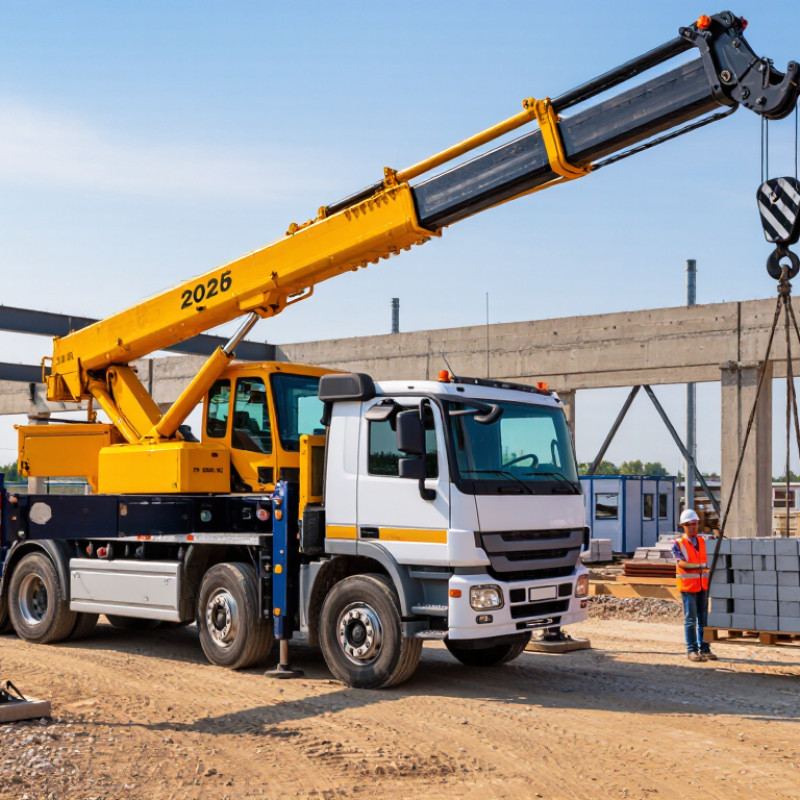
Before comparing capacity or reach, identify the crane’s actual configuration. A truck-mounted jib may use an articulating boom, a telescoping boom, or a fixed lifting arm. These are not interchangeable categories. Note how the boom moves, where it mounts, and whether it handles suspended loads or other materials. A site sketch helps: mark the truck position, load path, nearby overhead lines, and available setup space.
Then match the configuration to applicable standards. ASME B30.22 addresses articulating boom cranes, but it should not be assumed to cover every truck-mounted lifting device. A telescoping truck crane may fall under a different standard. Check the current standard’s scope, the crane’s documentation, and local requirements with a qualified crane professional. Small detail. Big difference. A label alone does not establish that a standard applies to the complete installation.
Ask the supplier or engineer to identify the governing standard in writing and explain any exclusions. Confirm that the truck mounting, stabilizers, controls, and rated load chart suit the intended work. Standards can change, and site conditions can expose gaps in an otherwise sound selection. I have seen a tidy specification miss a simple reach constraint. It is worth checking twice.
Calculate Required Capacity Using Load Moment: Load × Working Radius
How to Choose a Truck Mounted Jib Crane in 2026?
Start with the heaviest load you actually expect to lift, including the hook and lifting gear. Then measure the working radius: the horizontal distance from the crane’s center of rotation to the load’s center. Multiply load by radius to estimate load moment. For example, a 1,000 kg load at a 4 m radius creates a 4,000 kg·m moment. Small changes matter. At 5 m, the same load creates 5,000 kg·m.
Treat this calculation as a screening tool, not a capacity guarantee. A crane’s rated capacity changes with boom length, angle, and outreach. Check its load chart for the exact setup and radius, and account for the weight of slings, attachments, and other suspended gear. The truck’s payload, axle limits, ground conditions, and stabilizer position also affect a safe lift. A level driveway can still hide soft ground beneath one stabilizer. That detail is easy to miss. I would also question any plan based on a single “maximum capacity” figure; it rarely describes the lift you need. Have a qualified crane professional verify the configuration before selecting equipment.
Match Boom Reach, Mounting Space, and Vehicle Payload to the Job
How to Choose a Truck Mounted Jib Crane in 2026?
Match Boom Reach, Mounting Space, and Vehicle Payload to the Job
Start with the load’s actual landing point, not the crane’s maximum reach. Measure from the proposed mounting position to the farthest lift, including obstacles such as a wall, roof edge, or parked vehicle. A longer boom can reach farther, but its capacity usually falls as outreach increases. Check the crane’s load chart at the required radius, then add the weight of slings and attachments. Real sites are rarely as clear as a drawing.
Mounting space matters just as much. A jib needs room to rotate, and its base transfers lifting forces into the truck frame. Ask a qualified upfitter to check the frame, subframe, axle loads, and stabilizer footprint. Keep space for outriggers on the actual work surface. A narrow curbside setup may not provide a safe support area. It can be inconvenient to discover that after installation.
Payload is the remaining allowance after the truck, crane, body, crew, fuel, and tools are counted. The Federal Highway Administration lists 80,000 pounds as the general gross-weight limit on Interstate highways for qualifying U.S. vehicles; that is not a usable payload target or a substitute for axle ratings. Use certified scale weights where possible. NTEA’s truck-equipment guidance likewise emphasizes evaluating the completed vehicle, not just its chassis rating. Leave a margin. I would recheck the figures after equipment changes, because even a toolbox can shift axle loading.
How to Choose a Truck Mounted Jib Crane in 2026? - Match Boom Reach, Mounting Space, and Vehicle Payload to the Job
| Typical job |
Reach and load example |
Mounting-space check |
Vehicle-payload check |
What to verify before choosing |
| Loading equipment beside the truck |
Example: 300 kg at a 4 m working radius requires at least 1.2 tonne-metres of load moment before allowances. |
Measure the available mounting area behind the cab, including clearance for the boom, controls, and stabilizers. |
Allow for the crane, mounting frame, stabilizers, operator, passengers, fuel, and cargo within the vehicle’s legal limits. |
Check the crane load chart at the actual working radius; maximum rated capacity usually applies only at a shorter radius. |
| Placing materials over a roadside barrier |
Example: 200 kg at a 6 m radius requires at least 1.2 tonne-metres of load moment before allowances. |
Confirm that the boom can clear the truck body and barrier, and that stabilizers can be deployed on the available ground. |
Check axle loads as well as total vehicle mass; a truck can be within its gross rating yet exceed an axle limit. |
Include the hook, slings, and other lifting gear in the lifted load. Check operating restrictions for uneven or sloping ground. |
| Handling compact loads in a restricted site |
Example: 500 kg at a 3 m radius requires at least 1.5 tonne-metres of load moment before allowances. |
Compare the crane base and subframe dimensions with the chassis layout; keep required access to the cab, body, and service points. |
Use the vehicle’s documented payload after conversion, not the payload figure for the unmodified truck. |
Confirm that the crane configuration fits the chassis and that the bodybuilder or vehicle engineer approves the installation. |
| Reaching behind the truck or across a work area |
Measure the greatest horizontal distance from the crane’s rotation centre to the load’s pick-up and set-down points. |
Check the full rotation envelope, tail swing, boom stowage position, and clearance from nearby structures and traffic. |
Include the installed crane and supporting structure in the final vehicle mass and payload assessment. |
Use the load chart for the required direction and stabilizer setup; capacity can vary with boom extension and operating position. |
|
Planning note: Load-moment examples are arithmetic screening values (load × horizontal radius), not crane ratings or safe working loads. Final selection must follow the crane manufacturer’s load chart, installation requirements, local lifting rules, and the truck’s certified gross and axle limits. Allow for dynamic effects and all lifting accessories as required by the applicable procedures.
|
Compare Manufacturer Load Charts at Each Boom Angle and Extension
How to Choose a Truck Mounted Jib Crane in 2026?
A load chart is useful only when it matches the crane’s actual setup. Compare the manufacturer’s rated capacity at each boom angle and extension, not just the maximum advertised lift. A truck-mounted jib may handle a load close to the vehicle, yet have far less capacity with the boom fully extended. Check the chart for the exact configuration, including stabilizer position and any required counterweight. Small differences matter.
Look for clear capacity figures across the working range. For example, compare the rating at a low boom angle and short extension with the rating at a steeper angle and longer reach. Note whether chart values account for lifting accessories, and confirm how the manufacturer defines the load radius. A 500-kilogram load is not the whole story. Its distance from the crane’s centerline can change the allowable capacity sharply. If chart conditions are unclear, ask the manufacturer before choosing a model.
Tips: Mark the planned pickup and set-down points, then measure the greatest required radius. Match that radius and boom angle to the chart, with a sensible capacity margin. Verify the truck can support the specified stabilizer setup on the actual ground. Charts can be dense, and it is easy to read the wrong column; have a qualified operator or dealer check your selection.
Verify Stability, Outriggers, and Rated Capacity Before Selecting a Model
How to Choose a Truck Mounted Jib Crane in 2026?
A crane’s rated capacity is only meaningful when the truck is stable and the load stays within the manufacturer’s configuration limits. Check the load chart for the exact boom reach, jib angle, and outrigger position you plan to use. A longer reach can sharply reduce allowable capacity. Never treat the headline lifting figure as available at every radius. NIOSH documented 719 crane-related construction deaths in the United States from 1992 to 2006; this historical finding is a reminder that lift planning and stability deserve careful attention, not a prediction of current risk.
Inspect the ground where the truck will stand. Soft asphalt, sloped paving, or a buried utility can undermine an outrigger pad. Confirm the required outrigger spread and whether the crane’s chart allows partial extension. Check the truck’s chassis, mounting structure, and axle loads with qualified professionals; a crane that fits physically may still create an unsuitable working configuration. Ask for documentation covering rated capacity, stability conditions, and setup requirements. Small details matter.
Tips: Before selecting a model, sketch your most demanding lift: load weight, reach, working height, and truck position. Compare that scenario with the model’s load chart, then verify pad size and ground support. If the chart is unclear, pause and ask the supplier or a qualified engineer. Guessing is not a plan.