Choosing a Jib Crane Lift supplier in China involves more than comparing prices or reading a product catalogue. The right equipment must suit the load, work area, duty cycle, and installation conditions. A compact wall-mounted jib crane may serve a service bay, while a floor-mounted model may better cover a fixed production station. Reach and rotation matter. So do floor capacity, hoist compatibility, and operator access.
This guide introduces ten suppliers for buyers beginning their research. It considers practical factors such as product range, customization options, manufacturing information, and after-sales support. Clear drawings, load charts, inspection records, and spare-parts details can help buyers compare proposals with greater confidence. Ask how the supplier confirms rated capacity and what commissioning support is available. Details matter.
A supplier’s website is only a starting point. Confirm specifications, lead times, warranty terms, and service arrangements directly before making a decision. Requirements differ by facility, and a strong quotation may still miss a site constraint. That is worth remembering. The suppliers presented here are not a universal ranking; their suitability depends on each project’s needs and verification. Use the list to build questions, request documentation, and compare options carefully. A little uncertainty remains until the equipment, installation plan, and support are checked against the actual workplace.
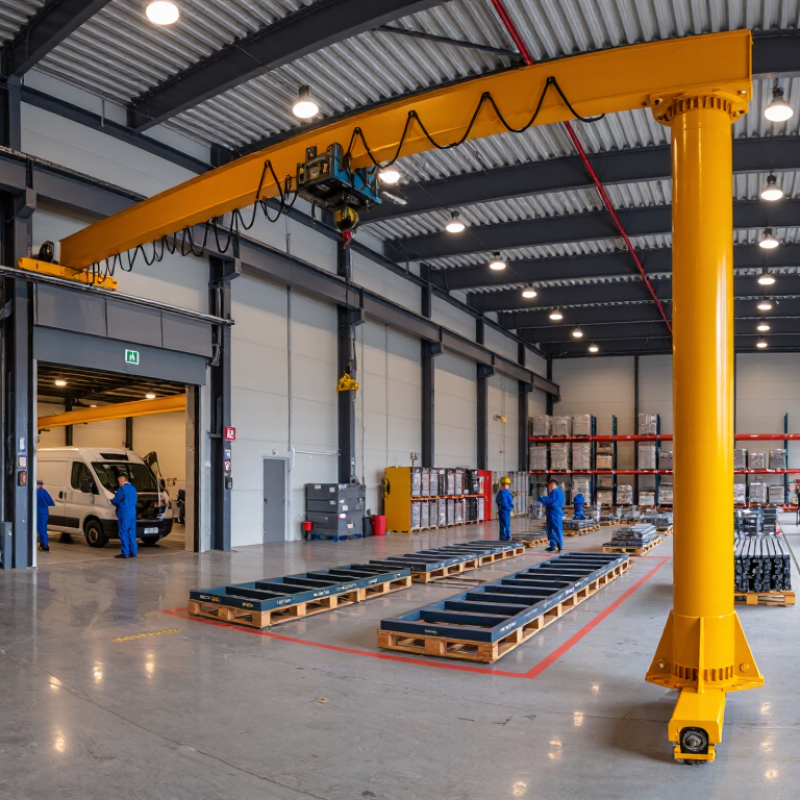
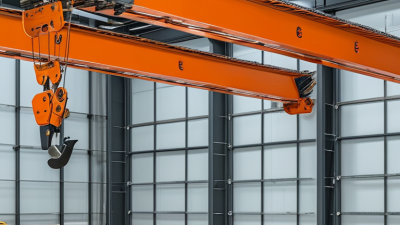
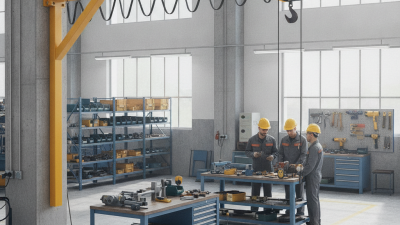
A jib crane is a lifting system with a horizontal arm, called a jib, supported by a wall or freestanding column. A hoist travels along the arm and raises or lowers a load. The crane can also rotate around its support, moving materials through a defined work area. It does not usually cover an entire building. It serves a workstation, production cell, or loading point.
Picture a mechanic lifting a motor from a bench and turning it toward an assembly stand. The jib crane keeps that movement local, reducing repeated manual handling and freeing floor space. Small movements matter. Still, the rated capacity alone does not tell the whole story. Arm reach, rotation angle, hoist speed, mounting structure, and the load’s shape all affect suitability. A long arm may reach farther, but it also creates greater forces at its support.
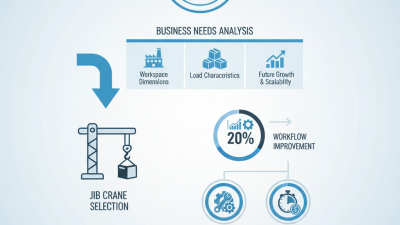
Choosing a jib crane begins with observing the actual task: where loads start, where they need to go, and how often lifting occurs. A supplier should review these details and confirm that the floor, wall, or foundation can support the proposed installation. Site measurements help, but they can miss awkward clearances or changing workflows. That part deserves a second look. Operators also need clear travel paths, suitable training, and routine inspection of the hoist, connections, and rotating parts.
China’s jib crane supplier market is not a simple list of factories. It includes equipment manufacturers, engineering integrators, component producers, and export-oriented trading companies. Their roles can overlap. A supplier may fabricate the steel structure in-house but source hoists or electrical controls from other producers.
Manufacturers often focus on standard wall-mounted, floor-mounted, or articulating jib cranes. Integrators are more likely to adapt the design to a specific workshop layout. They may assess column strength, lifting radius, duty cycle, and available headroom. Ask for drawings that show the mounting details, not just the rated capacity. A clear sketch can reveal whether the crane will interfere with a doorway or machine access.
Quality varies. That is worth remembering. Supplier comparisons should examine fabrication records, inspection procedures, load-test documentation, and spare-parts support. Photos of welds and painted frames help, but they do not replace technical records. Export companies can coordinate shipping and documentation, yet buyers should confirm who handles engineering questions after delivery. The market structure can be confusing, and even a careful review may leave gaps. Check those gaps before ordering.
When comparing China’s jib crane suppliers, assess engineering evidence before price. Ask for a load chart matched to the actual working radius, duty cycle, and mounting method. Check arm deflection, slew limits, braking, electrical protection, and foundation reaction calculations. ISO 4301-1 classification and ISO 9927 inspection guidance offer useful reference points. Request material traceability, welding procedures, inspection records, and a documented load-test report. Small details matter.
Safety capability deserves equal weight. The International Labour Organization’s 2023 global estimates report 2.93 million work-related deaths and 395 million non-fatal work injuries in 2019. These figures are not crane-specific, but they show why safety controls and maintenance support should be verified, not assumed. Compare commissioning plans, spare-parts availability, response times, and training materials. Ask for references from installations with similar loads and operating conditions. No scorecard is perfect. Site conditions can change the result, so validate drawings and service commitments with the people who will install and maintain the crane.
Suggested weighting for comparing suppliers on practical purchasing criteria. These are framework weights, not verified scores or rankings for individual companies.
Prioritize rated capacity and safety compliance, then compare duty classification, design suitability, delivery, and after-sales support. Verify specifications and certifications against the supplier’s documentation and applicable standards.
Profiles of ten Chinese jib crane suppliers should compare more than rated capacity. Buyers can examine engineering options, fabrication controls, test records, and service support. A supplier’s drawings should show the column or wall connection, outreach, rotation, and load path. Ask how the quoted duty class matches the expected lift cycles. Small details matter. A trolley that clears a low beam can prevent costly site changes.
Grand View Research estimated the global crane market at about US$34.3 billion in 2023, reflecting broad demand for lifting equipment. This figure covers cranes generally, not jib cranes alone. It provides market context, not proof of any supplier’s quality. For a meaningful comparison, review ten supplier profiles against the same checklist: rated load, working radius, rotation angle, hoist specification, inspection documentation, lead time, and spare-parts availability. Request a sample inspection report and clarify which components are made in-house. A polished profile is useful, but it cannot replace verified records. Some suppliers may offer limited public data; that deserves follow-up, not an automatic rejection.
Tips: Confirm the available floor space, headroom, and foundation strength before comparing quotations. Share the real load shape and lifting frequency. Then ask each supplier to state assumptions in writing.
Comparing China’s jib crane lift suppliers requires more than checking price and lifting capacity. Start with the actual job: load weight, arm reach, rotation angle, duty cycle, and available floor or wall support. Ask for a drawing that shows anchor locations and clearance around the hook. A 500-kilogram rating alone tells you little if the crane will lift repeatedly near full reach. Request recent project examples with similar working conditions, plus details on inspection, spare parts, and service response times.
Tips: Check the paperwork. Ask for the rated-load test record, material and component specifications, operating manual, and applicable conformity documents. Confirm that model numbers match across the crane, quotation, and certificates. Have a qualified engineer review support loads and installation details. Small discrepancies matter.
Compare written offers line by line, including installation scope, delivery terms, warranty limits, and operator training. Verify which safety devices are included, such as upper-limit protection and emergency stopping, and whether they suit your application. A factory visit or live video inspection can help you assess assembly quality, but it is not a guarantee. I have seen tidy documents leave practical questions unanswered; clarify who handles commissioning and what happens if the crane fails its acceptance test. Select the supplier that explains risks clearly, not merely the one with the shortest quote.
Comparison framework for evaluating China-based jib-crane suppliers. The ten profiles below are anonymous, illustrative procurement scenarios—not verified company rankings or quotations. Capacity, reach, configuration, price, and lead time depend on the project and must be confirmed in a supplier’s signed technical proposal.
| Illustrative Supplier Profile | Typical Product Focus | Example Capacity to Request | Example Working Radius | Mounting and Rotation Options | Hoist and Controls to Compare | Compliance Evidence to Request | Factory and Quality Checks | Service and Commercial Checks | Best-Fit Use Case |
|---|---|---|---|---|---|---|---|---|---|
| Profile 1 — Compact workstation specialist | Light-duty pillar or wall-mounted workstation cranes | 125–500 kg | 2–5 m | Floor-mounted pillar or engineered wall bracket; manual or powered rotation | Confirm hoist duty rating, lifting speed, pendant controls, and overload protection | Request applicable design standards, risk assessment, electrical diagrams, and test records | Inspect weld quality, base-plate details, fasteners, and documented load testing | Check installation instructions, spare-parts availability, warranty terms, and response times | Assembly benches and light material handling |
| Profile 2 — General-purpose pillar-crane supplier | Freestanding pillar jib cranes for workshops and production areas | 250 kg–2 t | 3–7 m | Base-plate anchoring or foundation bolts; typically manual rotation at lower capacities | Compare chain versus wire-rope hoist, travel limits, and controls suitable for the duty | Ask for design calculations, rated-capacity marking, operating instructions, and inspection guidance | Review foundation loads, anchor-bolt specification, material traceability, and final inspection records | Clarify foundation responsibility, commissioning scope, and delivery terms | Machine loading and general workshop lifting |
| Profile 3 — Wall-mounted jib-crane specialist | Wall-mounted cranes intended to avoid floor-mounted columns | 125 kg–1 t | 2–6 m | Bolted or otherwise engineered building connection; manual or powered rotation | Check hoist travel, hook approach, control pendant reach, and obstruction clearance | Request structural interface calculations and confirmation of the supporting structure requirements | Verify bracket geometry, connection details, and installation tolerances | Agree who assesses the building structure and who installs and inspects the crane | Workstations with suitable structural walls or columns |
| Profile 4 — Enclosed-track workstation supplier | Low-inertia workstation systems with enclosed track or lightweight boom designs | 125–1,000 kg | 2–6 m | Usually pillar or structural-wall mounted; manual rotation is common | Compare rolling effort, trolley type, hook height, and ergonomic control options | Request rated-load documentation, instructions, inspection requirements, and electrical documentation if powered | Check track alignment, trolley travel, end stops, and smooth operation under load | Ask about layout changes, replacement components, and operator training | Frequent, repetitive lifting at individual workstations |
| Profile 5 — Powered-rotation supplier | Jib cranes with motorized slew for heavier or higher-frequency operation | 500 kg–5 t | 3–10 m | Pillar or engineered wall-mounted; powered rotation with defined limits | Check slew speed, braking, limit devices, emergency stop, and control arrangement | Request control schematics, protective-device details, risk assessment, and applicable conformity documents | Review motor and gearbox specifications, brake checks, wiring quality, and test procedures | Confirm electrical supply, commissioning, operator familiarization, and service support | Repeated cycles or loads that are difficult to rotate manually |
| Profile 6 — Heavy-duty industrial supplier | Higher-capacity pillar cranes and engineered jib systems | 2–10 t, subject to design | 4–12 m, subject to load and structure | Typically engineered pillar mounting; powered rotation may be specified | Review hoist duty classification, braking, lifting speed, and service access | Request design calculations, load combinations, material records, inspection plan, and test certificates | Audit critical weld procedures and inspection records; verify foundation and support reactions | Include engineering review, installation, commissioning, and planned maintenance in the quotation | Industrial handling where load, reach, or duty requires project-specific engineering |
| Profile 7 — Outdoor and corrosion-protection supplier | Jib cranes specified for outdoor, washdown, or corrosive environments | 250 kg–5 t, subject to design | 3–10 m, subject to design | Weather-exposed pillar or structural mounting; rotation selected for the application | Specify environmental protection for motors, controls, cables, and hoist—not only the crane structure | Request coating specification, electrical enclosure ratings, operating limits, and maintenance instructions | Check surface preparation, coating thickness records, drainage details, and corrosion-prone interfaces | Confirm inspection frequency, coating repair method, and protection of electrical components | Outdoor yards and environments with moisture or corrosive exposure |
| Profile 8 — Customized-engineering supplier | Non-standard reach, height, mounting, or process-interface designs | Project-specific; provide the required load spectrum | Project-specific; confirm full-load deflection and clearance | Custom pillar, wall, or structural interface, subject to engineering approval | Define hoist duty, control logic, travel limits, and process interlocks before ordering | Require approved drawings, calculations, risk assessment, and a document register before manufacture | Use design reviews, hold points, weld inspection records, and witnessed testing where appropriate | Set drawing approval dates, change-control rules, acceptance criteria, and delivery milestones | Sites with unusual layouts, clearances, or production requirements |
| Profile 9 — Export-project supplier | Jib cranes prepared for overseas installation and project documentation | Commonly quoted across light to medium capacities; confirm each design | Confirm the proposal against site dimensions and load path | Specify mounting, power supply, control language, and shipment configuration | Confirm local voltage and frequency, control labels, plug or wiring requirements, and hoist documentation | Check destination-market rules and request the exact declaration, technical file documents, and standards claimed | Agree inspection plan, packing standard, preservation method, and factory acceptance test scope | Compare Incoterms, export packing, documentation, installation boundaries, and claims process | Buyers importing equipment for installation outside China |
| Profile 10 — Service-oriented project supplier | Supply packages including installation coordination, commissioning, and maintenance support | Selected to match the application; verify rated capacity and duty | Selected after checking coverage, clearances, and structural reactions | Mounting and rotation selected after a site and structure review | Request a complete equipment list, control description, and maintenance schedule | Check applicable local requirements, manuals, inspection records, and commissioning documentation | Ask for inspection and test plans, acceptance criteria, and records delivered with the equipment | Define service coverage, response targets, training, spare parts, and warranty exclusions in writing | Projects where installation and ongoing support matter as much as equipment price |

Compliance note: Requirements depend on the crane design, destination market, and installation. For China-market projects, ask the supplier to identify applicable Chinese standards and provide supporting documentation. For EU projects, verify the applicable conformity route and legislation for the placing-on-market date; a CE mark alone does not establish that the equipment suits the site. Obtain load charts or rated-capacity information, structural reaction data, operating instructions, electrical documentation where applicable, inspection and test records, and written confirmation of installation responsibilities. Never treat the example ranges above as a design specification or a supplier’s verified capability.