10 Best Jib Equipment Options for Global Buyers?
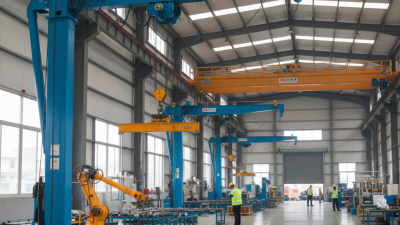
Choosing the right Jib Equipment can shape productivity, safety, and long-term operating costs. Global buyers face different factory layouts, lifting regulations, climates, and service expectations. A compact wall-mounted jib may suit a repair bay, while a freestanding model may serve a busy production cell.
John Wessels, founder of Spanco and a veteran lifting-equipment specialist, expressed a practical principle: “The best crane is the one designed around the application.” That idea guides this review. Each option is assessed through usable capacity, outreach, rotation, headroom, duty cycle, installation method, and maintenance access. Those details matter when a 500-kilogram load must move precisely beside a machine, or when a 2-ton arm works through repeated shifts.
Real projects are rarely tidy. A catalog rating alone does not reveal floor strength, wind exposure, corrosion risk, or operator visibility. Buyers should verify structural calculations, lifting accessories, controls, emergency stops, and local compliance before ordering. A cheaper unit may become expensive after foundation changes or unavailable replacement parts.
This guide compares ten Jib Equipment options for international purchasing teams. It considers workshops, warehouses, ports, assembly lines, and outdoor service areas. Some choices prioritize flexibility. Others favor high capacity or lower installation complexity. Not every option will fit every site. That is the point.
Specifications can look impressive. Practical fit matters more. Expect useful comparisons, clear limitations, and a few areas requiring further engineering review. A careful decision begins with the load, the workspace, and the people using the equipment daily.
Jib Equipment Basics and Key Features for Global Buyers
Jib equipment is a lifting system built around a horizontal or angled arm.
The arm supports a trolley, hoist, and suspended load. Common options include wall-mounted, floor-mounted, portable, articulating, telescopic, davit, and truck-mounted jibs. Each design serves a different working radius and installation condition.
The basic assembly usually includes a mast, boom, bearing, limit device, wire rope, hook, and control system.
Load charts matter. They show safe capacity at different outreach distances.
Buyers should check rated load, rotation range, lifting speed, power supply, and emergency stopping functions. In coastal or humid areas, protective coatings and sealed electrical parts deserve closer attention. Dusty workshops may need different protection.
During equipment inspections, I have found that installation space is often underestimated.
A jib can fit on paper but interfere with doors, walkways, or nearby machines. Foundation strength, floor thickness, anchor quality, and headroom require documented checks. Global buyers should request drawings, test records, manuals, spare-part lists, and clear maintenance intervals. Local technicians may also need compatible voltage and control components. A low purchase price can hide difficult installation costs. That is an uncomfortable detail. Buyers should compare total operating needs, not only lifting capacity. Manufacturer claims still require independent verification, especially when duty cycles, temperature changes, or frequent outdoor use are involved.
Ten Leading Jib Equipment Options by Application
10 Best Jib Equipment Options for Global Buyers
Ten Leading Jib Equipment Options by Application
Choosing jib equipment starts with the work area, not the catalog picture. A wall-mounted jib suits repetitive lifting beside a fixed production line. A column-mounted jib offers broader coverage around a structural support. Foundationless models reduce installation time on reinforced concrete floors. They still require careful floor checks. A portable counterbalanced jib helps maintenance teams move loads between workstations. Its mobility can reduce efficiency when repositioning becomes frequent.
For tight spaces, an articulating jib reaches around corners, machines, and storage racks. A low-headroom jib works beneath beams where standard booms cannot rotate safely. An under-braced design may improve clearance, but it can demand stronger anchoring. Outdoor yards often use weather-resistant floor-mounted jibs with sealed bearings and protected controls. Washdown areas need corrosion-resistant components and smooth surfaces that do not trap residue. Cleanroom applications require low-particle operation and controlled lubrication. Pneumatic rotation can suit environments where electrical equipment needs special protection.
Electric rotation supports precise handling in assembly and packing operations. Manual rotation remains practical for lighter loads and lower duty cycles. Check rated capacity at the actual outreach, not only at the boom base. Load charts, rotation limits, anchoring details, and local standards should be reviewed by qualified personnel. I have seen good equipment underperform because operators ignored swing clearance. That mistake is easy to repeat. Maintenance records should include brake checks, fastener inspections, and unusual noise. No option fits every facility, and application data may expose an inconvenient redesign.
10 Best Jib Equipment Options for Global Buyers
The chart compares ten commonly specified jib equipment options by typical safe working load and maximum outreach. Values represent practical market ranges for general industrial, construction, logistics, maintenance, and material-handling applications; final specifications depend on the design, duty cycle, mounting structure, and local safety requirements.
Safety Standards, Certifications, and Regional Compliance
For global buyers, the safest jib equipment choice starts with regional compliance, not lifting capacity alone. Wall-mounted, floor-mounted, and articulated jibs may follow different design requirements. Check the equipment’s rated load, duty class, working radius, and emergency stop arrangement. A clear load chart should be fixed near the operator’s position.
Ask for traceable documentation. Depending on the market, this may include CE or UKCA conformity records, applicable ANSI/ASME references, electrical test reports, and ISO-based risk assessments. Local rules can also require professional installation, periodic inspections, or operator training. A certificate is not proof of complete safety. It may cover only one component or production stage.
Tips: Confirm the manufacturer’s declaration, serial number, weld inspection records, and test load results. Measure floor strength before selecting a floor-mounted jib. Check voltage, control labels, and guarding before shipment. Keep translated manuals available for local workers. Inspect hooks, wire ropes, brakes, and anchor bolts before commissioning. Small oversights become expensive. I have found that buyers often trust paperwork more than site conditions, which is understandable but imperfect. Have an independent engineer review the installation when risks or regulations remain unclear.
How to Select, Source, and Maintain Jib Equipment Worldwide
Selecting jib equipment for global projects requires more than comparing lifting capacity. Start with the working load, outreach, rotation range, mounting surface, and daily lifting frequency. A 500-kilogram jib may perform well indoors but fail operationally in coastal wind, dust, or limited headroom. Check the complete load chart, not only the advertised maximum.
Source equipment from suppliers who provide test certificates, installation drawings, material details, and clear spare-parts support. Local inspection rules may differ, so confirm documentation with a qualified engineer before purchase. Ask how the boom was tested, which protective coating was applied, and whether replacement bearings are available in your region. Shipping damage is common. Photograph the crate before opening it.
Maintenance should follow a written schedule based on actual use. Inspect welds, bolts, hooks, brakes, and anchor points before each shift. Look for bent steel, unusual noise, cracked paint, or grease mixed with metal dust. Lubricate moving joints as specified, then record the date and technician’s name. Stop operation when a safety device behaves strangely. Small errors matter.
I have seen teams focus heavily on price and underestimate installation quality. That decision can create alignment problems, vibration, and early wear. A perfect checklist does not exist. Review inspection records after the first month, question unexpected wear, and adjust the maintenance interval when site conditions demand it. A practical jib is not merely strong; it remains traceable, serviceable, and suitable for the country where it operates.